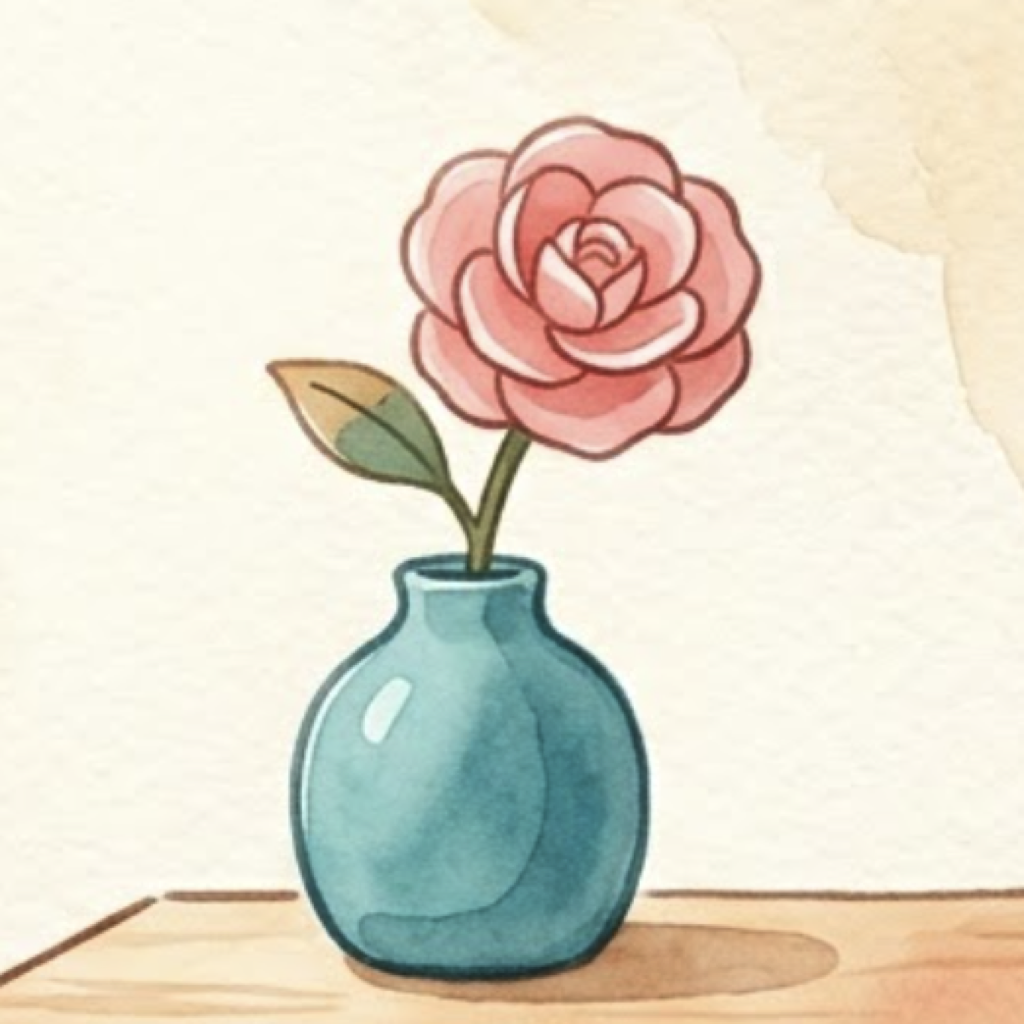
a bouquet of alternatives
9 Flowers That Mean Love (Besides the Red Rose)
April 11, 2026 · 3 min read
The red rose has a monopoly problem. It says I love you so loudly and so officially that reaching for it requires no thought at all — which is precisely what's wrong with it. The language of flowers has at least a dozen other words for love, each with its own shading: declared love, patient love, first-sight love, love that stayed. Choosing the right one is the difference between a form letter and a letter.
Here are nine alternatives, sorted by the kind of love they actually mean.
1. Red tulip — love declared
The tulip is the extrovert of the love flowers: a Persian legend of a lover's blood, one bloom per stem, no subtext. A red tulip says I'm telling you plainly. Less ceremony than the rose, more nerve. (The full tulip story.)
2. Peony — love that prospers
Romance plus abundance — the peony means married love, honor, and a household doing well, which is why it owns the 12th anniversary and half the world's wedding bouquets. Give peonies when the love in question has a future being planned inside it. (More on the peony.)
3. Camellia — love that waits
Pink camellias mean longing for you; red, a steady flame. The camellia is the love flower for distances, deployments, and everyone whose feelings run quieter than their circumstances allow. (The camellia's field note.)
4. Forget-me-not — love that remembers
Five tiny blue petals carrying the most literal name in botany. The German legend: a knight, gathering these flowers by a river for his lady, fell in the current and threw the bouquet ashore with the words Vergiss mein nicht! — forget me not. It means true love holding on across separation, and it's the flower of keeping faith with those gone.
5. Lavender — love that stays devoted
Not passion — constancy. Lavender keeps its fragrance years after drying, and its love-meaning matches: quiet, patient, faithfully recurring. The love flower for the long-married and the long-distance. (Lavender's full meaning.)
6. Lavender rose — love at first sight
One rose earns a spot on an alternatives list: the lavender one, floriography's official flower of enchantment at first sight. For the very beginning, when even a red tulip would be premature. (All the shades are in the rose color guide.)
7. Baby's breath — love everlasting
The bouquet's smallest flower holds its longest promise. Gypsophila means everlasting love — which is why it circles the roses at weddings, and why a cloud of it alone is a legitimate, quietly radical love bouquet. (Baby's breath, reconsidered.)
8. Honeysuckle — the bonds of love
June's second birth flower means devoted affection — from the way the vine holds whatever it climbs and doesn't let go. Victorian dictionaries read it as the sweetness of love that binds; anyone who has smelled a hedge of it in the evening needs no translation.
9. Sunflower — adoration
Not romance's flower, exactly — adoration's. The sunflower follows its sun the way certain people light up when a particular someone enters the room, and everyone nearby can see it. For the love that's also admiration. (The sunflower's story.)
Composing the sentence
The trick to a love bouquet that says something: pick one flower for the kind of love, add baby's breath if you mean permanently, and write the flower's meaning on the card — the translation is half the gift. A single red tulip with its legend explained will outperform two dozen anonymous roses.
Every flower on this list lives (or will) in the Flower Corner of Bloomette — a hand-painted flower studio for iPhone where bouquets whisper their meanings. For the full grammar, start with the language of flowers.