floriography
The Language of Flowers: A Beginner's Guide to Floriography
July 11, 2026 · 3 min read
Before text messages, there were tussie-mussies: small, tight bouquets that carried sentences. A sprig of this, a bloom of that, and suddenly a handful of flowers said I miss you, or I'm sorry, or be careful of him. The Victorians called this practice floriography — the language of flowers — and for a few decades in the 1800s it was a full-blown craze, complete with competing dictionaries.
You don't need to memorize a dictionary to enjoy it. You just need a few common words.
How the language worked
The rules were half-serious, half-game:
- The flower carried the meaning. A red rose meant love; rosemary meant remembrance; a striped carnation meant I can't be with you.
- The color changed the tone. Same flower, different shade, different sentence — a white rose and a yellow rose are not saying the same thing.
- Presentation mattered. A bouquet handed upright meant the message as written. Handed upside down, it meant the opposite. (Victorians were not above passive aggression.)
- The reply could be wordless too. Touching the flowers to your lips meant yes. Tearing off a petal and letting it fall meant no.
A starter vocabulary
A few blooms cover most of what you'd ever want to say:
- Rose — love, in every dialect. Red for passion, pink for gratitude, white for new beginnings. (More in our rose color guide.)
- Tulip — a declaration of love; the tulip is famously bad at keeping secrets. See what tulips mean.
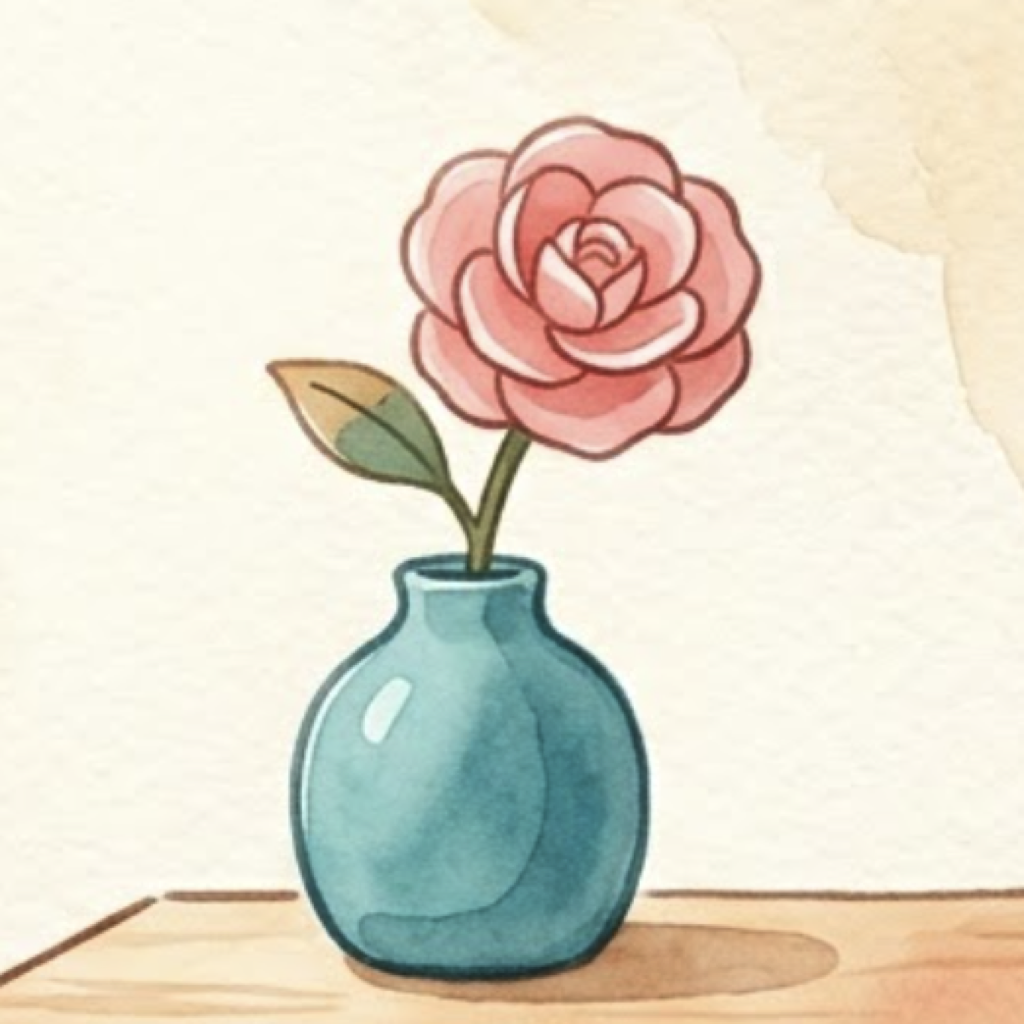
- Camellia — quiet devotion and longing. The subtle one. We wrote a whole field note on the camellia.
- Hydrangea — gratitude for being understood; also, historically, an accusation of coldness. A complicated flower — its story is here.
- Baby's breath — everlasting love and innocence, the soft cloud that says and I mean it around whatever else is in the vase.
- Lavender — devotion, serenity, and distrust, oddly, in the oldest dictionaries. Context is everything.
- Rosemary — remembrance. "There's rosemary, that's for remembrance," says Ophelia, and every Victorian reader nodded.
Why a dead language still matters
Nobody today hands a coworker a striped carnation and expects to be understood. But floriography survives in the choices we still make without thinking: red roses on anniversaries, lilies at funerals, a single sunflower to cheer someone up. The dictionary faded; the instinct didn't.
And there's a quieter reason to learn it: it slows you down. When you know that the camellia means longing and the tulip means declaration, arranging a few stems stops being decoration and becomes a small act of composition — you're writing, just not with words.
Try writing a sentence
Next time you put flowers in a vase, pick them like words:
- Choose one bloom for the subject — the feeling you mean (a pink camellia: I miss you).
- Add a second for tone — softer or brighter (baby's breath: gently, always).
- Let greenery be the punctuation.
That's the whole craft. Three stems can hold a sentence.
This is more or less what Bloomette is about: a cozy little flower studio where every bouquet you arrange whispers its own meaning, and a Flower Corner field guide fills in the folklore one bloom at a time. Free on iPhone, no ads — just five quiet minutes of floriography a day.