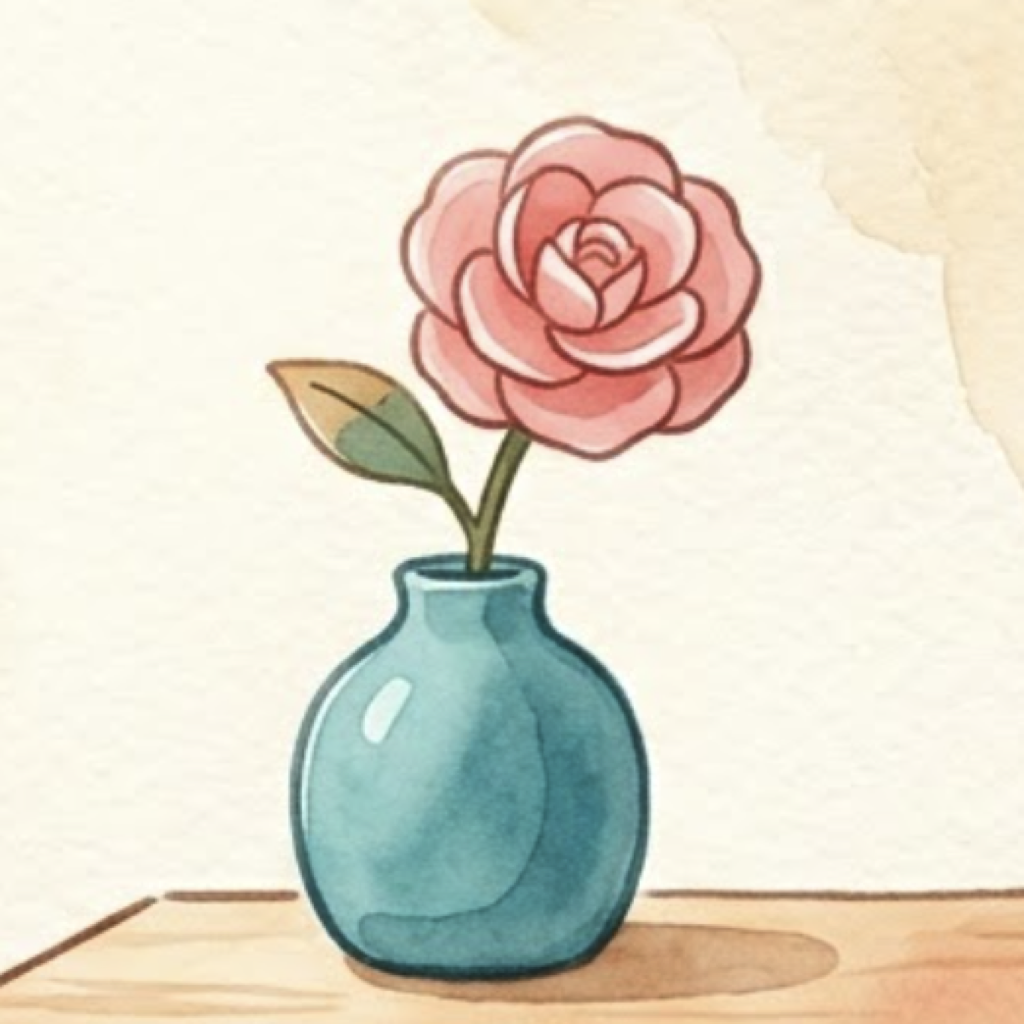
Nelumbo nucifera
Lotus Meaning: The Flower That Rises Clean from the Mud
May 9, 2026 · 3 min read
Every lotus starts its day underwater. The bud closes at dusk, sinks below the surface of the pond, and rises again at dawn to open — clean, dry, untouched by the murk it just came through. Its leaves are so water-repellent that scientists named the phenomenon the lotus effect: mud simply cannot stick.
Humans noticed. No flower on earth carries more spiritual weight, and the symbolism is really just close observation: something beautiful can rise out of murky water, every single morning, unstained.
What the lotus symbolizes
Across Asia and beyond, the lotus stands for purity, rebirth, resilience, and enlightenment — not purity as never-touched innocence, but the harder kind: coming through something and emerging clear. The mud isn't incidental to the meaning. It's the point. A lotus cannot grow in clean water; it needs the muck to bloom.
Color refines the reading:
- Pink lotus — the supreme lotus, associated with the Buddha himself. Devotion and the highest enlightenment.
- White lotus — purity of mind and spirit. The womb-of-the-world flower in many traditions.
- Blue lotus — wisdom over the senses. Usually shown partly closed: knowledge still opening.
- Red lotus — the heart. Love and compassion in their generous forms.
The lotus in Buddhism and Hinduism
In Buddhist teaching, the lotus is the standard image for the path itself: roots in mud (ordinary struggle), stem rising through water (practice), flower above the surface (awakening). Buddhas are painted seated on open lotuses, and one of the most repeated mantras — om mani padme hum — holds the flower at its center: the jewel in the lotus.
Hindu tradition goes further back. Brahma the creator emerges from a lotus growing out of Vishnu's navel; Lakshmi, goddess of prosperity, stands on one. In both traditions the flower means the same startling thing: creation prefers to start in the mud.
The lotus is the national flower of both India and Vietnam — in Vietnamese tradition it's counted among the four noble plants, and the proverb runs gần bùn mà chẳng hôi tanh mùi bùn: near the mud, yet never smelling of it.
The seed that waited a thousand years
The lotus has one more trick that folklore couldn't have invented better. Its seeds are among the most patient on the planet — sacred lotus seeds recovered from a dry lakebed in northeastern China were germinated after roughly 1,300 years of dormancy, and grew. Rebirth isn't a metaphor this plant reaches for. It's a demonstrated capability.
Egypt's "lotus," briefly
The blue "lotus" of Egyptian art — painted on tombs, held at banquets — was botanically a water lily (Nymphaea caerulea), a different plant with the same daily habit of closing and reopening. The Egyptians read it as the sun's flower: it sank at night and rose at dawn, so it came to mean the sun, creation, and life returning. Different species, same conclusion. Some symbols are just written into the behavior.
When to give a lotus
Cut lotus is rare in Western shops, but the meaning travels in other forms — a potted water lily, lotus artwork, a single seed pod in a dried arrangement:
- To someone rebuilding after a hard year: nothing says it better.
- For meditation corners and new practices: the blue or white lotus is the classic emblem.
- To mark a genuine fresh start — recovery, graduation after struggle, a second act.
The lotus floats through Bloomette, our hand-painted flower studio for iPhone — meet it in the Flower Corner, where its story is told, and let it anchor a pond-colored bouquet. For more flowers that carry rebirth, the cherry blossom makes a lovely companion read.