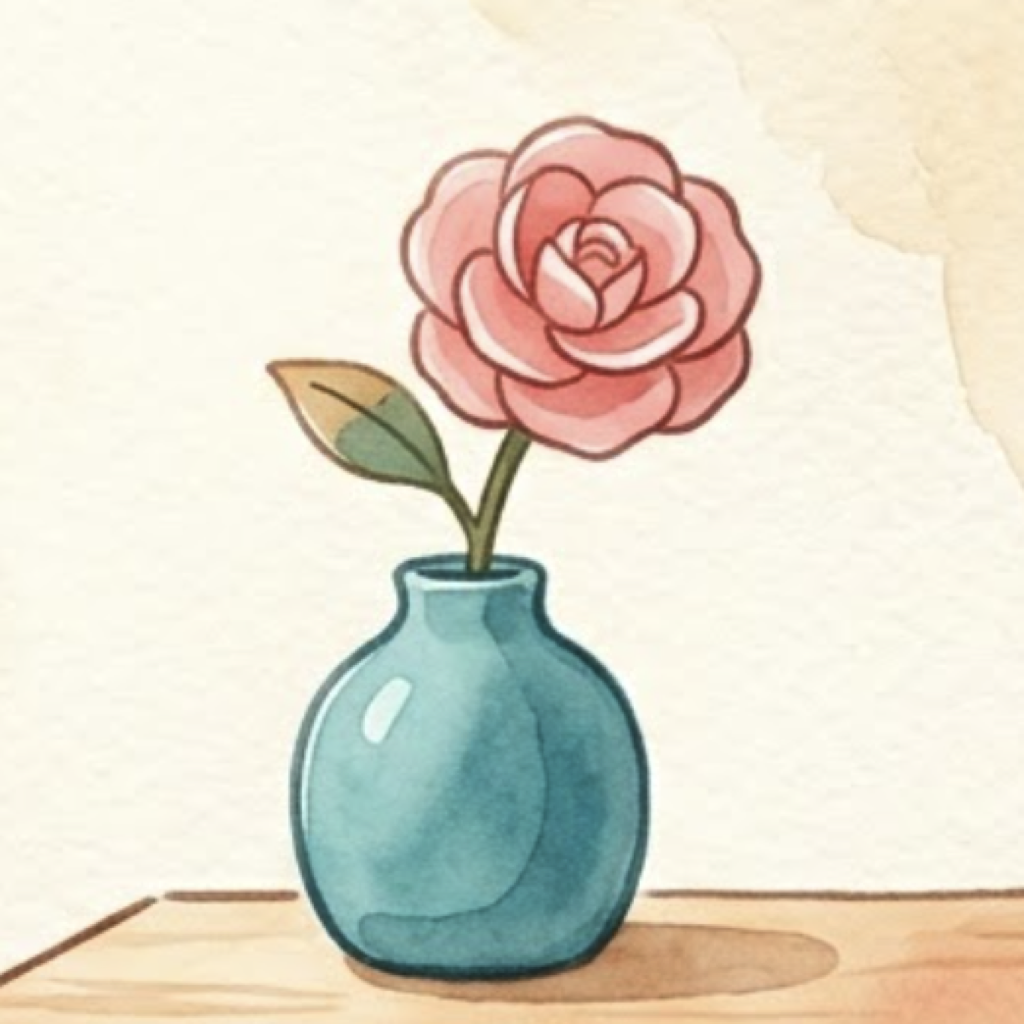
Prunus serrulata
Cherry Blossom Meaning: Sakura and the Beauty of Not Lasting
April 20, 2026 · 3 min read
Every spring, Japan's national television broadcasts a forecast that has nothing to do with weather: the sakura zensen, the cherry blossom front, tracking the bloom as it sweeps north from Okinawa to Hokkaido. Offices plan parties around it. Train stations crowd. And the entire spectacle celebrates a flower whose defining feature is that it will be gone in about a week.
That's not a flaw in the symbolism. It is the symbolism.
What the cherry blossom means
The sakura's meaning is the most philosophically loaded in all of floriography: the beauty and brevity of life. A cherry tree blooms all at once, holds its cloud of pale pink for seven to ten days, and then lets go — petals falling while still fresh, still perfect, a snowfall in reverse season that the Japanese call hanafubuki, "flower blizzard."
The blossoms fall at their peak, not after decline. Japanese culture read that carefully and drew the tradition's central lesson: things are not beautiful despite being temporary. They are beautiful because they are.
Secondary meanings orbit the main one: renewal and optimism (the school year and fiscal year both begin in April, under the blossoms), gentleness and innocence (the soft pink), and in China — a different tradition — feminine beauty and love.
Mono no aware
The sakura is the emblem of a Japanese aesthetic concept worth knowing even if you never learn another: mono no aware (物の哀れ) — often translated as "the pathos of things," the bittersweet, tender awareness that everything passes. Not grief, exactly. The feeling of watching petals fall and finding it lovely and a little sad at the same time, and understanding that the two feelings are one.
Cultures with a word for this tend to schedule picnics under falling petals. Cultures without one tend to invent plastic flowers.
Hanami: the picnic with a thousand years of history
Hanami — "flower viewing" — began with the Heian court in the 8th century, aristocrats composing poetry beneath the blossoms, and gradually democratized into what it is now: all of Japan, on blankets, under the trees, with food and drink and colleagues and grandmothers. There's an old proverb, hana yori dango — "dumplings over flowers" — teasing everyone who comes for the picnic more than the petals. Both are the point.
The samurai, characteristically, took the flower more sternly: a blossom that falls at its brightest became their emblem of a life honorably ended at its peak. Petals of the same flower — one culture's picnic, another's epitaph. (The camellia, whose blossoms drop whole, carries the darker cousin of this meaning.)
Blossom-watching outside Japan
The sakura travels well. Washington, D.C.'s 3,000-plus trees were an official gift of friendship from Tokyo in 1912, and the Tidal Basin bloom now draws over a million visitors a year. Similar gifted groves bloom in Vancouver, Amsterdam, and Bonn — living diplomacy that outlasted every government that arranged it.
If you go anywhere to see them, the local lesson applies globally: check the forecast, and don't postpone. The entire meaning of this flower is that next weekend may be too late.
What to do with the meaning
Cherry blossoms resist the vase — cut branches are lovely but brief even by their own standards. The sakura's uses are different:
- Go and look. It's the one flower whose traditional gift is attendance.
- Mark beginnings — under the flower of April starts, decisions dated to blossom week have a good pedigree.
- Borrow the lens. Mono no aware works on more than petals: seasons, dinners, children's ages, quiet evenings. The blossom teaches the noticing.
Noticing small, temporary, lovely things is more or less the entire design brief of Bloomette — a hand-painted flower studio for iPhone where the day's bloom waits in the Flower Corner and a bouquet takes five quiet minutes. The petals fall; the field guide remembers.