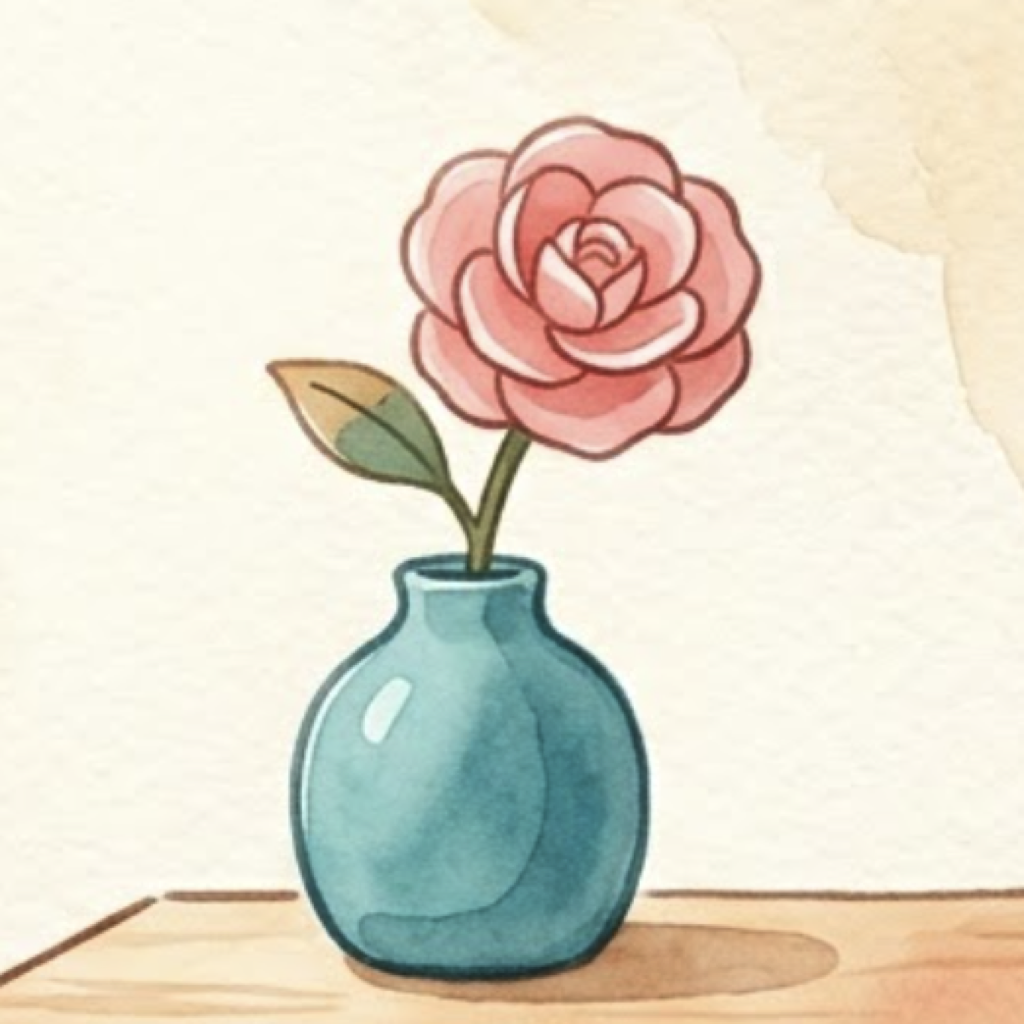
vase-life science
How to Make Cut Flowers Last Longer: What Works and What's Folklore
April 8, 2026 · 3 min read
Somewhere between the flower shop and the fourth day of drooping, everyone hears the folk remedies: a penny in the vase, an aspirin, a splash of vodka, a capful of bleach. Some of these half-work. Most are theater. The real levers of vase life are less colorful — water, cutting, cleanliness, placement — and they reliably double how long a bouquet lasts.
Here's what the evidence supports, and what's folklore.
The four habits that do the work
1. Recut the stems — underwater if you can. Stems seal themselves within a minute of cutting, and air drawn into the stem blocks water flow like a bubble in a straw. Trim an inch off at a sharp angle the moment flowers come home, ideally under running water or submerged, and repeat every two or three days. The angle matters less than the freshness of the cut.
2. Strip everything below the waterline. Submerged leaves are the number-one bouquet killer. They rot within a day or two, feeding the bacteria that plug stems. Every leaf under water is a countdown; strip them all before the first vase-fill.
3. Change the water — actually change it. Not top up: dump, rinse the vase, refill. Cloudy water is a bacterial soup, and bacteria kill flowers faster than dehydration does. Every two days is the professional rhythm; lukewarm for most flowers, cold for bulbs like tulips.
4. Place the vase like you'd place a napping cat. Away from direct sun, radiators, and drafts — heat accelerates everything, including dying. And away from the fruit bowl: ripening fruit releases ethylene gas, a plant hormone that fast-forwards petal drop. Bananas are the worst offenders. This single relocation adds days.
The flower-food question
That little sachet is real, and it's the only additive with solid evidence. It contains exactly three things: sugar (food), acidifier (helps stems drink), and biocide (keeps bacteria down). Use it, and use the dosage on the packet — half-strength sachets feed the bacteria more than the flowers.
Out of sachets? The credible home version mixes all three roles: 1 teaspoon sugar + 2 teaspoons lemon juice + a few drops of bleach per liter. Sugar alone backfires — it's fertilizer for the rot.
The folklore, audited
- A penny in the vase — mostly myth. The theory was copper-as-fungicide, but modern pennies are zinc with a copper coat, and even solid copper doesn't dissolve enough to matter.
- Aspirin — weak. It acidifies slightly; lemon juice does it better and more predictably.
- Vodka — trace truth, impractical. Ethanol can slow ethylene production at precise low doses; at guessed doses you're just pickling the stems.
- Hairspray on petals — cosmetic at best, suffocating at worst. Skip.
- A drop of bleach — the one folk remedy that survives audit: it's the biocide from the sachet, freelancing. A few drops per liter, no more.
Know your flower's clock
Even perfect care can't equalize genetics. Roughly: daffodils and tulips give about a week; roses, seven to ten days; lilies, up to two weeks as buds keep opening; carnations and chrysanthemums, two to three weeks, the marathoners. Mixed bouquets age unevenly — pull each bloom as it fades, both for looks and because dying flowers exhale ethylene onto their neighbors.
And when the last stems begin to tire: that's not the end, that's a fork. Half can dry beautifully.
The two-minute evening version
All of the above compresses into a tiny ritual: pull the faded, top up or change the water, one fresh snip where needed, turn the vase. It takes two minutes, extends the bouquet by days — and works nicely as the anchor of a five-minute wind-down.
Or keep one bouquet that needs no water at all: Bloomette is a hand-painted flower studio for iPhone — cut, trim, and place watercolor blooms that hold their color forever, five quiet minutes at a time.