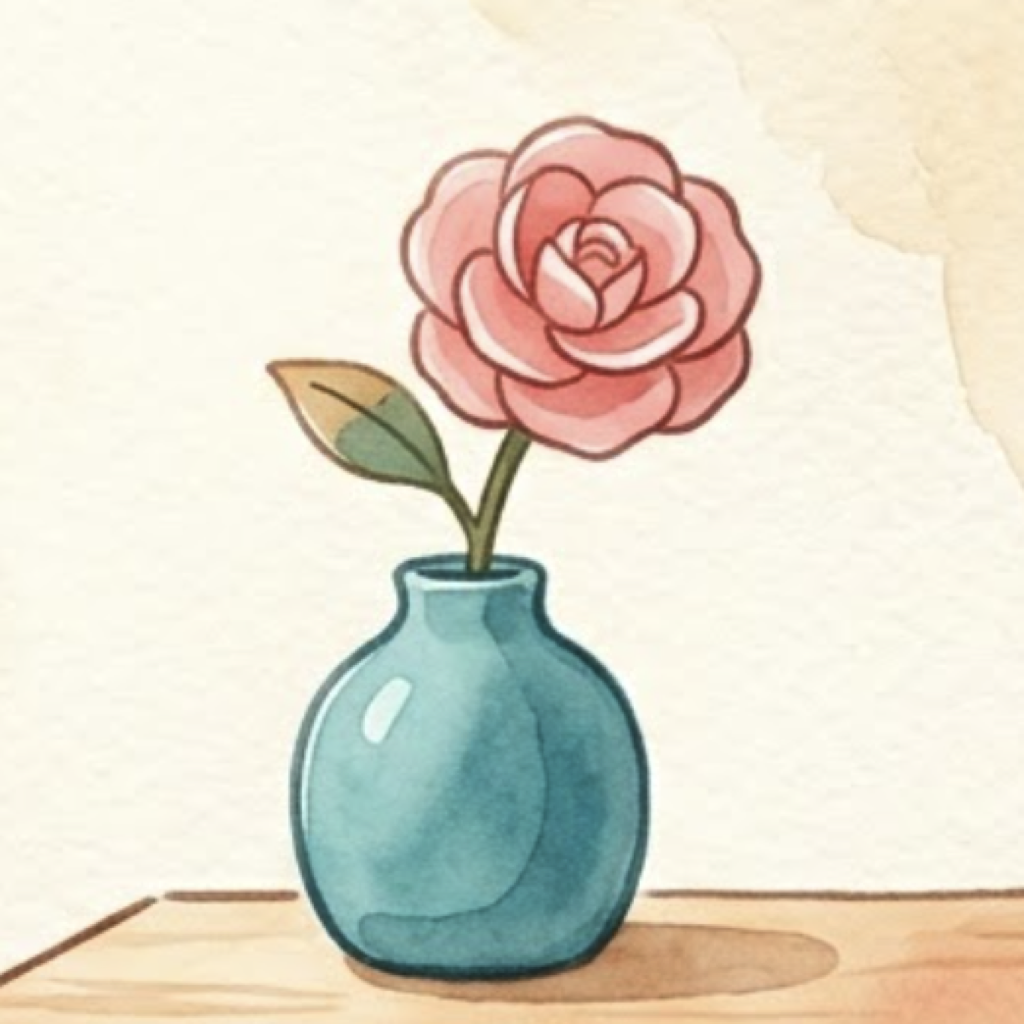
a bouquet for a friend
7 Flowers That Mean Friendship (and What Each One Says)
June 6, 2026 · 3 min read
Romance gets the whole rose section, and grief gets the lilies — but friendship, the relationship most of us actually run on, barely gets a shelf. Which is odd, because floriography has always had plenty to say about it. There is a flower for the friend you've had since childhood, one for the friend far away, one for the friendship you hope will become something more, and one for the friend you simply want to make laugh on a Tuesday.
Here are seven, and how to choose.
1. Yellow rose — the classic
The headline friendship flower. It wasn't always — Victorians read yellow roses as jealousy — but the meaning mellowed over a century into warmth, joy, and platonic devotion, and today a bunch of yellow roses is the least ambiguous friendly gesture in the shop. That's its superpower: a red rose needs context, a yellow rose needs none. (The full spectrum is in our rose color guide.)
Give it when: you want zero chance of being misread.
2. Alstroemeria — the loyal one
Also called the Peruvian lily, alstroemeria means devoted friendship and mutual support. Florists' favorite detail: its leaves grow twisted, turning upside down as they mature — read for generations as a symbol of the twists a long friendship survives. Six little blooms per stem, two weeks in the vase, absurdly good value. The flower equivalent of the friend who always shows up.
Give it when: the friendship has been through some things.
3. Zinnia — for the friend far away
In the Victorian dictionaries, zinnias mean thoughts of absent friends. They're bright, slightly scrappy, cut-and-come-again garden flowers — the more you pick, the more they bloom, which is roughly how good long-distance friendships work too.
Give it when: someone's moving away, or you've just visited a friend you see once a year.
4. Sunflower — the adoring one
Sunflowers carry adoration and loyalty — the flower that famously tracks the sun as a bud and then, grown, settles on facing east for good. Between friends it reads as pure, uncomplicated cheer at scale; nobody has ever received sunflowers and felt neutral about it. (More on the heliotropism, and why it stops, in our sunflower guide.)
Give it when: your friend needs their whole kitchen brightened, not just a vase.
5. Yellow tulip — sunshine in your smile
Yellow tulips once meant hopeless love; the modern reading is far kinder — "there's sunshine in your smile" and cheerful thoughts. They're the early-spring option, cheap in armfuls, and they keep growing in the vase, leaning toward whatever light your friend's apartment has.
Give it when: it's March, they've had a long winter, and the stall has them in bunches.
6. Freesia — the trustworthy one
Freesia means trust — the load-bearing wall of any friendship — plus thoughtfulness in some readings. It's also one of the best-scented cut flowers in existence, citrus and honey, which makes it the connoisseur's friendship pick: quiet meaning, loud perfume.
Give it when: a friend kept a confidence, or you want to say I know I can tell you things.
7. Pink camellia — for the friend you miss
The camellia in pink means longing for you — affectionate missing, without drama. Between friends it's the "it's been too long" flower, ideal for reunions and apologies for being bad at texting.
Give it when: the group chat has been quiet for months and you want to fix it in person.
Choosing quickly
- Universal, can't-miss: yellow roses.
- Old friend, long history: alstroemeria.
- Far away: zinnias, or pink camellia when you finally reunite.
- Needs cheering up: sunflowers or yellow tulips.
- "Thank you for being solid": freesia.
And a note on what not to give: skip red roses (obviously), red tulips, and red carnations — all declarations of romance in the old language. Friendship deserves its own vocabulary, and as it turns out, it has a rich one.
Every flower on this list grows in Bloomette, our hand-painted flower studio for iPhone — build the friendship bouquet, screenshot it, and send it to the group chat. For the grammar behind all these meanings, start with the language of flowers.